Automate Service Charge Collection in Nigerian Estates
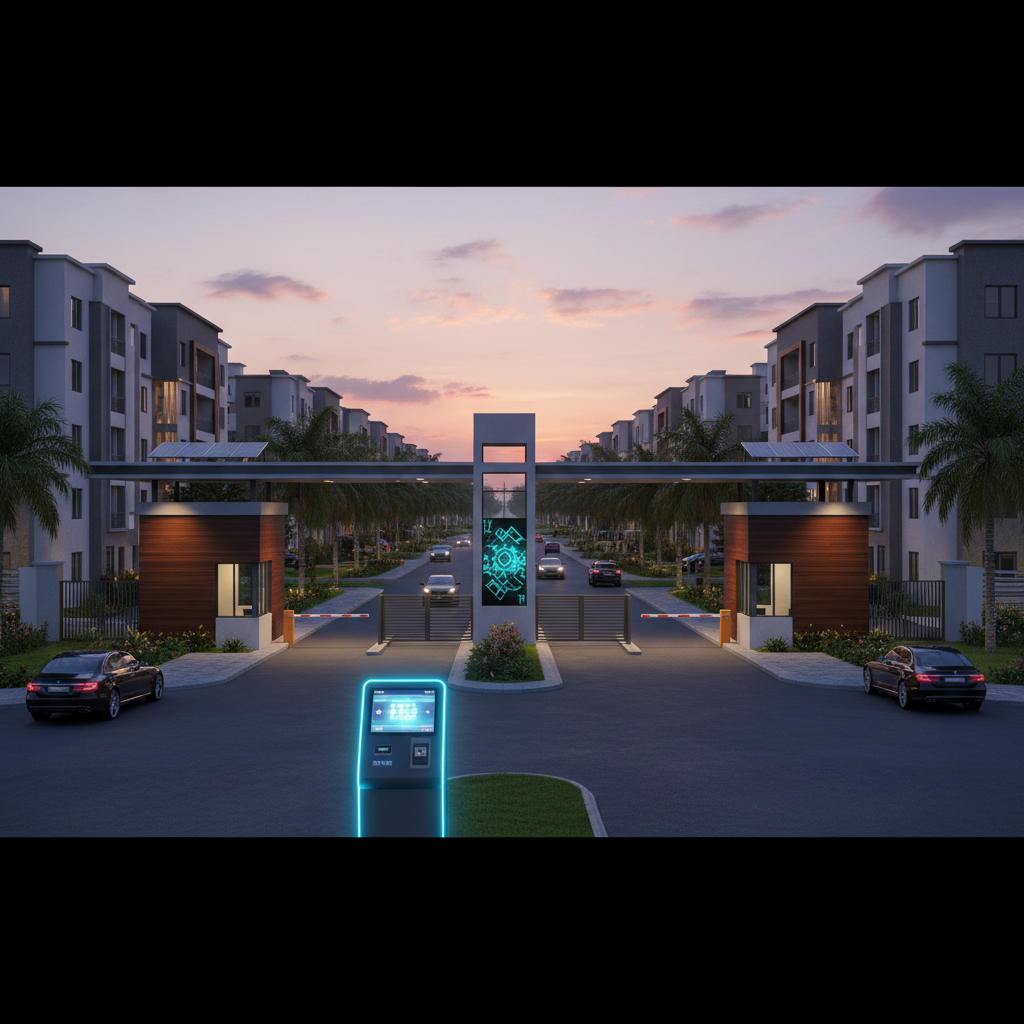
Every estate manager in Nigeria knows the frustration — missed payments, awkward follow-up calls, spreadsheets that never quite balance, and residents who claim they never received an invoice. Manual service charge collection is one of the biggest operational headaches facing residential estate managers today. The good news? Automation is here, and it is transforming how Nigeria's gated communities, serviced apartments, and urban developments handle estate finances.
This guide walks you through exactly how to replace outdated, manual collection processes with a smarter, automated system — covering billing, payment reminders, transparent reporting, and everything in between.
Why Manual Collection Is Failing Estates
Manual service charge collection relies heavily on human effort — physical receipts, bank tellers, WhatsApp reminders, and follow-up phone calls. This approach is time-consuming, error-prone, and deeply frustrating for both estate managers and residents.
In many Nigerian residential estates, collection rates hover below 60% simply because there is no consistent, structured process. Residents forget. Managers get overwhelmed. And the estate suffers — delayed maintenance, unpaid security wages, and crumbling common facilities.
Beyond the financial loss, manual processes damage trust. When residents cannot easily verify what they owe or confirm that their payments have been received, disputes arise. Transparency breaks down, and confidence in estate management erodes.
Automation solves all of this by removing human bottlenecks, standardising billing, and giving every stakeholder real-time visibility into estate finances.
Step 1: Digitise Your Resident Database
Before automating anything, you need a clean, centralised record of every resident, unit, and payment obligation. This is your foundation.
Start by compiling all unit details — unit numbers, resident names, contact information, occupancy status (owner or tenant), and lease or ownership start dates. Many estates operating manually have this scattered across notebooks, Excel files, and informal WhatsApp groups.
Migrating this data into a digital estate management platform like NokVision allows you to assign each resident a unique profile tied directly to their unit. From that profile, billing cycles, payment history, and communication logs all flow automatically.
What to Capture Per Unit
- Unit number and block
- Resident name and contact details
- Occupancy type (owner-occupied or tenanted)
- Service charge category (where applicable)
- Outstanding balance from previous periods
Getting this data right from the start prevents billing errors and makes the transition to automation seamless.
Step 2: Configure Automated Billing Cycles
Once your resident database is set up, the next step is configuring your billing structure. Automated billing means the system generates and delivers invoices on a defined schedule — without any manual input from your management team.
Decide on your billing frequency: monthly, quarterly, or annually. Most Nigerian residential estates charge service fees quarterly or annually, though monthly billing can improve cash flow consistency and reduce default rates.
With a platform like NokVision, you define the billing rules once — the amount, due date, applicable units, and charge categories — and the system handles everything from there. Invoices are automatically generated and delivered to residents via email or in-app notification on the same day, every cycle.
Structuring Your Charge Categories
Not all service charges are equal. Estates often have multiple charge types:
- Base service charge — covering security, cleaning, and general maintenance
- Utility levies — shared generator fuel, water supply, or waste management
- Facility charges — pool, gym, or clubhouse access fees
- Special assessments — one-time fees for specific capital projects
Your automated billing system should support multiple charge categories per unit, ensuring that each resident receives an itemised invoice that reflects exactly what they owe and why.
Step 3: Enable Multiple Payment Channels
One of the most common reasons residents delay payment is inconvenience. If paying a service charge requires a trip to the bank or a manual transfer with a reference number that must be confirmed by a human, many residents will postpone it.
Automation removes that friction. A modern estate management platform provides residents with multiple payment options directly from their dashboard or mobile device — bank transfers, card payments, USSD, or integration with popular Nigerian payment gateways.
When a resident logs into NokVision, they can see their outstanding balance, view their invoice, and pay instantly. The system confirms the payment in real time, updates the ledger, and sends a receipt — no phone calls, no manual reconciliation required.
Benefits of Multi-Channel Payments
- Residents pay on their schedule, from anywhere
- Instant confirmation reduces disputes
- Management receives funds faster
- Automatic reconciliation eliminates manual bank statement reviews
The easier you make it to pay, the higher your collection rate will be. This is not just theory — estates that adopt digital payment channels consistently report collection rate improvements of 30% to 50% within the first few months.
Step 4: Set Up Automated Payment Reminders
Even with easy payment channels, some residents will miss due dates. Life gets busy. Automated reminders ensure your collection process stays active without your management team lifting a finger.
Configure your platform to send a series of reminder notifications at strategic intervals — for example, seven days before a due date, on the due date itself, and three days after if the payment remains outstanding. These reminders can be delivered via SMS, email, and in-app push notification simultaneously.
NokVision's automated notification engine allows estate managers to customise reminder messages, ensuring communication remains professional and on-brand while still being firm and clear about obligations.
Escalation Protocols
For persistent defaulters, automation can trigger escalation steps:
- Day 1 overdue — Friendly reminder notification
- Day 7 overdue — Formal notice with outstanding balance highlighted
- Day 14 overdue — Management alert flagging the account for review
- Day 30 overdue — Restriction of access to non-essential estate facilities (where applicable)
This systematic approach replaces the uncomfortable, inconsistent one-on-one follow-up calls that managers typically dread. It also ensures every resident is treated equally and fairly, reducing the perception of favouritism that often plagues manually managed estates.
Step 5: Implement Transparent Financial Reporting
Transparency is not just a nice-to-have — it is essential for building trust between residents and estate management. When residents can see exactly where their service charges are going, they are far more motivated to pay on time.
Automated financial reporting gives estate managers a real-time dashboard of collection performance: total billed, total collected, outstanding balances, defaulter lists, and period-over-period trends. This data is always current and always accurate.
On the resident side, NokVision's role-based dashboard allows each resident to view their own payment history, download receipts, and track their account balance — reducing queries to management and eliminating disputes over whether a payment was received.
Reports Every Estate Manager Needs
- Monthly collection summary — Total invoiced vs. total collected
- Defaulter report — Residents with outstanding balances by age
- Unit-level payment history — Full transaction record per unit
- Cash flow forecast — Projected inflows based on billing schedules
- Expenditure vs. income statement — Demonstrating how funds are deployed
Sharing financial summaries with the residents' association or estate board on a regular basis builds accountability and reinforces confidence in management — a significant upgrade from the opaque, paper-based systems many estates still rely on.
Step 6: Integrate Maintenance Tracking
Service charge collection does not exist in isolation. Residents are more likely to pay promptly when they can see that their money is being used effectively — and that means maintenance requests are being handled efficiently.
Integrating your billing system with a maintenance management module closes the loop. When residents submit a maintenance request and see it resolved quickly, their perception of value improves, and their motivation to pay service charges increases.
With NokVision, residents submit maintenance requests directly through the platform, management assigns tasks to the appropriate team, and progress is tracked in real time. This integration between financial and operational management creates a comprehensive picture of estate performance — and demonstrates to residents that the system is working for them.
Step 7: Review, Optimise, and Scale
Automation is not a one-time setup — it is an evolving system. Once your automated service charge process is running, schedule regular reviews to assess performance and identify opportunities for improvement.
Analyse your collection rate month over month. Review which reminder sequences are most effective. Assess whether your billing structure accurately reflects the services being delivered. Use the data your platform generates to make evidence-based decisions rather than relying on gut feeling.
As your estate grows — or if you manage multiple estates — a scalable platform like NokVision grows with you. The Professional Plan supports up to 500 units with advanced analytics, while the Enterprise Plan offers custom integrations and unlimited units for large-scale operations.
Common Mistakes to Avoid
Transitioning from manual to automated collection is straightforward, but a few common errors can slow you down:
Skipping the data clean-up phase. Migrating inaccurate or incomplete resident data into a new system just transfers the problem. Take time to verify every unit record before going live.
Setting and forgetting. Automation handles the heavy lifting, but estate managers still need to review reports, investigate anomalies, and respond to escalations. Automation reduces workload — it does not eliminate management responsibility.
Failing to communicate the change. Residents need to know that the estate is moving to a new system. Send a clear communication explaining what is changing, why it is better for them, and how to use the new platform. NokVision makes resident onboarding simple, but your communication strategy sets the tone.
Ignoring partial payers. Automated systems can be configured to handle partial payments gracefully — recording what has been received and keeping the balance outstanding. Make sure your platform handles this correctly rather than marking a partial payment as either fully paid or fully overdue.
Why NokVision Is Built for Nigerian Estates
NokVision was designed specifically for the realities of Nigerian residential estate management. The platform understands local payment behaviours, infrastructure constraints, and the unique dynamics of gated community governance.
From automated billing and multi-channel payment processing to real-time financial dashboards and resident self-service portals, NokVision provides everything an estate management team needs to move beyond spreadsheets and WhatsApp groups.
The platform is trusted by over 50 estates across Nigeria and supports thousands of residents, delivering 99.9% uptime reliability and dedicated support when you need it. Getting started takes minutes — register your estate, invite your residents and staff, and begin automating your service charge collection immediately.
Pricing is structured to suit estates at every stage:
- Starter Plan — ₦15,000/month for up to 50 units
- Professional Plan — ₦45,000/month for up to 500 units
- Enterprise Plan — Custom pricing for large or multi-estate operations
The Future of Estate Finance Is Automated
Manual service charge collection is a relic of an older, less efficient era. For Nigeria's growing residential communities — gated estates, serviced apartments, and urban developments — the pressure to professionalise estate operations has never been greater.
Residents expect transparency. Management teams need efficiency. And estates need reliable cash flow to deliver the services that communities depend on.
Automation is not a luxury — it is a competitive necessity. The estates that adopt digital billing, automated reminders, and transparent financial reporting today will be the ones that attract quality residents, maintain better facilities, and build stronger, more accountable communities tomorrow.
NokVision makes that transition simple, secure, and smart. The shift starts with one decision — to stop managing manually and start managing intelligently.