Deep Cleaning vs. Regular Cleaning: What Your Home Actually Needs
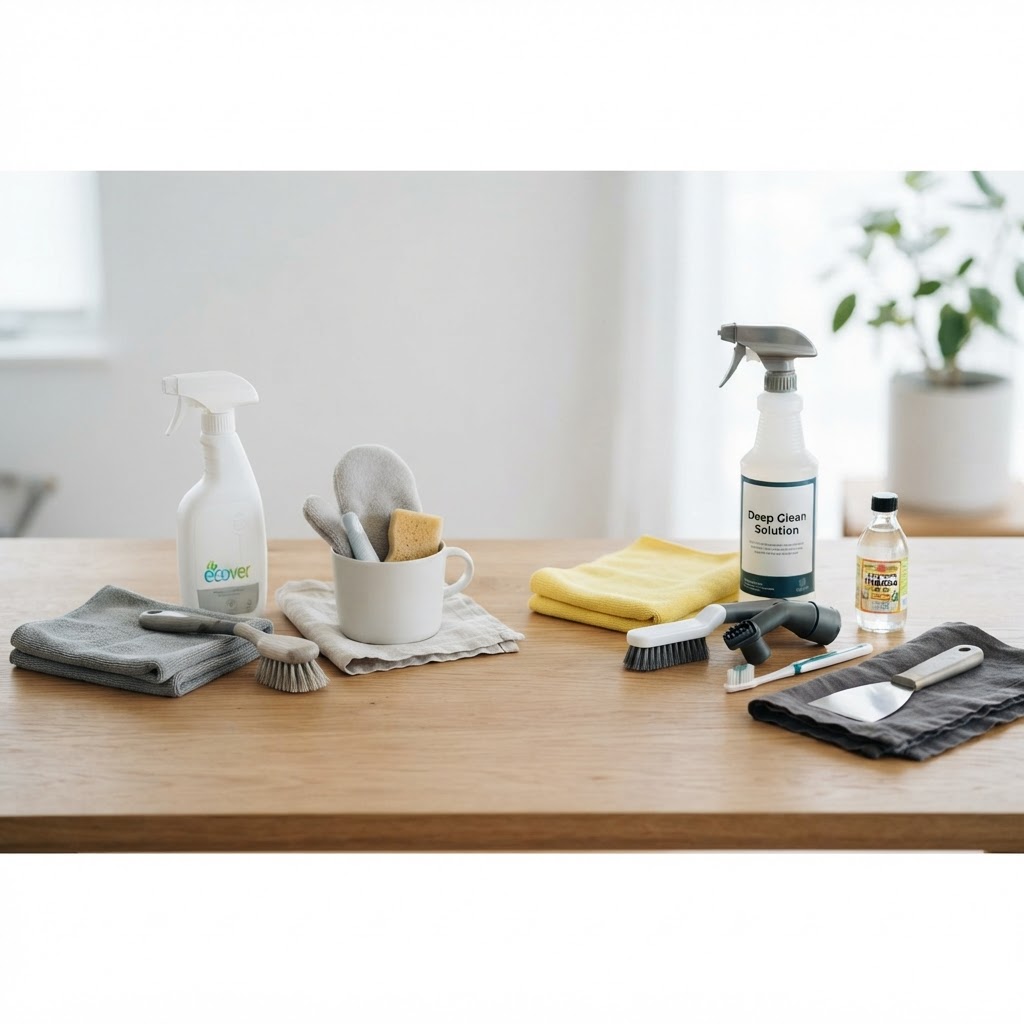
Maintaining a clean home is one of the most fundamental responsibilities of residential life — yet most homeowners and estate managers in Nigeria operate without a clear framework for what kind of cleaning is actually required, and when. The result is a familiar pattern: surfaces look tidy, but hidden grime accumulates behind appliances, inside cabinet hinges, and within tile grout until the damage becomes visible and costly.
Understanding the distinction between regular cleaning and deep cleaning is not merely a matter of domestic preference. In Nigeria's rapidly growing gated communities, serviced apartments, and urban residential estates, how maintenance is structured and coordinated has a direct impact on property value, resident health, and operational efficiency. This guide breaks down both approaches, explains when each is appropriate, and shows how modern estate management platforms like NokVision are transforming how these tasks are tracked, assigned, and verified.
What Is the Difference Between Regular and Deep Cleaning?
Surface Maintenance vs. Restorative Sanitization
Regular cleaning and deep cleaning are not interchangeable terms — they serve fundamentally different purposes and demand entirely different investments of time, equipment, and skill.
Regular cleaning is a maintenance-level activity. It focuses on preserving a livable environment by addressing the surfaces and spaces that are visibly used every day. This includes vacuuming carpeted areas, mopping tiled floors, wiping kitchen countertops, scrubbing toilet bowls, and dusting accessible shelving. A thorough regular clean typically takes between one and three hours per session, depending on the size of the property, and is ideally performed on a weekly basis.
Deep cleaning, by contrast, is a restorative process. It targets the hidden zones that routine cleaning consistently bypasses — the areas behind heavy refrigerators and washing machines, inside kitchen cabinets and oven interiors, the grout lines between bathroom tiles, and the underside of sinks where mildew often establishes itself undetected. A comprehensive deep clean of a standard three-bedroom apartment in Lagos or Abuja can take eight to twelve hours or longer when done properly.
The objective of regular cleaning is to prevent visible deterioration. The objective of deep cleaning is to return the property to a near-new condition by eliminating embedded bacteria, chemical residue, and biological waste that ordinary tools cannot reach. Both are essential — they simply operate on different timescales and serve different purposes within a complete home maintenance strategy.
When Is a Regular Cleaning Schedule Enough?
Managing Daily Wear in Urban Nigerian Homes
For most occupied residential units in Nigerian urban centres — particularly in high-density developments like those found in Lekki, Ikeja GRA, and Abuja's Maitama district — a consistent regular cleaning schedule is the backbone of home hygiene. Urban environments generate significant airborne dust, vehicle exhaust particulates, and humidity-driven mould spores, all of which settle on surfaces daily.
Regular cleaning plays a critical preventive role beyond mere aesthetics. Weekly kitchen and trash-area upkeep actively discourages the pest activity — cockroaches, rodents, and ants — that thrives in environments where food residue is allowed to accumulate. In Nigeria's warm, humid climate, this prevention is not optional; it is a health necessity.
There is also a psychological dimension to consistent tidiness. Studies on residential environments consistently link orderly living spaces to lower perceived stress levels and improved cognitive clarity — benefits that are particularly relevant for professionals in Nigeria's high-pressure urban economy. A clutter-free environment signals control and supports mental well-being.
A functional weekly checklist for Nigerian urban homes should include: dusting shelves and ceiling fans, scrubbing toilet bowls and sinks, wiping kitchen countertops and appliance exteriors, sweeping and mopping all floors, and clearing clutter from high-use areas. For related pest prevention guidance, the article on how often you should fumigate your home offers a practical seasonal framework.
Why Invest in a Professional Deep Clean Every Quarter?
Health, Longevity, and the Seasonal Reset
There are specific life events that make a professional deep clean not just advisable but essential. Moving into a newly acquired or newly vacated property — regardless of how clean it appears — demands a full deep clean before occupation. The same applies after home renovations, which deposit fine construction dust, adhesive residue, and chemical compounds into every crevice of the property. Preparing for large family gatherings, particularly in the context of Nigerian celebrations where multiple guests will occupy the home, is another clear trigger.
Beyond event-driven deep cleans, the concept of the seasonal reset provides a useful framework: scheduling a comprehensive deep clean every three to six months prevents the gradual degradation of surfaces, fixtures, and air quality that accumulates invisibly over time. Indoor air pollutants — including volatile organic compounds (VOCs) from paint and furniture off-gassing — can reach concentrations two to five times higher than outdoor levels in poorly maintained homes, according to the US Environmental Protection Agency. For homes with young children and pets, this risk is substantially elevated.
Professional deep cleaning also requires tools that are simply not part of a standard household kit. Industrial-grade steam cleaners operating at temperatures above 120°C eliminate bacteria and dust mites from upholstered furniture and mattresses. HEPA-filter vacuum systems capture particulates as small as 0.3 microns that conventional vacuums recirculate into the air. Enzymatic cleaning agents break down biological stains at a molecular level. The expertise to deploy these tools correctly, without damaging expensive surfaces, is itself a specialized skill. For estate managers interested in the broader cost picture, the guide on managing estate costs in a high inflation economy provides valuable context on budgeting for professional services.
How Does Professional Maintenance Impact Nigerian Property Value?
Accountability in Gated Communities
The connection between rigorous home maintenance and property value is not anecdotal — it is quantifiable. In Nigerian gated communities where prestige and perceived security are central to pricing, the condition of individual units and shared facilities directly influences the market value of every property within the estate. An estate where common areas are visibly deteriorating communicates neglect; one where every corridor, lobby, and recreational facility is immaculately maintained commands premium rents and higher resale valuations.
This is the foundation of professional estate administration. Property managers who implement standardized cleaning protocols — documented, scheduled, and auditable — maintain higher occupancy rates because prospective tenants and buyers can observe the evidence of operational discipline. The hidden crisis in Lagos estate management often begins precisely here: when maintenance standards are inconsistent and accountability is absent.
Transparency is equally critical when it comes to service charges. Nigerian estate residents are increasingly aware of how their levies are being utilized, and management teams that cannot demonstrate the direct link between service charge collection and facility upkeep erode trust rapidly. Detailed maintenance logs and spending reports address this concern directly.
The financial consequences of neglect are also significant. Deferred HVAC maintenance leads to compressor failures that can cost three to five times more than preventative servicing. Unaddressed plumbing leaks accelerate the structural degradation of concrete and woodwork. According to the National Association of Realtors, properties with documented maintenance histories sell at measurably higher prices than comparable properties without such records — a principle that applies directly to the Nigerian market.
How Can NokVision Simplify Maintenance Coordination?
Technology for Operational Simplicity
The practical challenge in most Nigerian estates is not the absence of willingness to maintain properties — it is the absence of systems to coordinate, track, and verify that maintenance actually happens. This is precisely where NokVision's estate management platform delivers transformative value.
Through the NokVision resident-facing mobile application, homeowners and tenants can submit maintenance requests directly from their phones, attach photographs of the issue, and monitor the progress of their request in real time. Estate managers receive instant notifications, assign tasks to vetted service providers or in-house technicians, and update residents as work is completed. This eliminates the ambiguity and frustration that characterizes manual maintenance coordination in most Nigerian estates.
For estate management teams, the platform provides centralized task management dashboards that make it impossible to overlook a scheduled deep cleaning cycle. Recurring maintenance tasks — quarterly deep cleans, monthly gutter inspections, bi-annual HVAC servicing — can be programmed with automated reminders, ensuring that no critical task falls through the administrative cracks. This directly supports the goal of maintaining the consistent standard that drives property value.
NokVision's QR-based visitor access control system adds another layer of operational intelligence when third-party cleaning crews arrive on the estate. Rather than relying on manual security log entries — which are easily forgotten or falsified — every external service provider is issued a time-limited digital visitor pass. Estate security teams can verify identity at the gate, and the system automatically logs entry and exit times, creating a verified audit trail of who entered the property and when. This is the principle of security through visibility in direct practice.
The platform also automates service charge billing and payment reminders, reducing the administrative overhead associated with manual collection by up to 70%. Residents receive automated invoices, payment confirmations, and financial summaries — creating the transparency that builds genuine trust between management and the community. Learn more about NokVision's full capabilities at nokvision.com.
What Should a Nigerian Estate Cleaning Checklist Include?
Quality Assurance Through Structured Protocols
A structured approach to cleaning avoids the two most common failure modes: overwhelming residents with the scope of the task, and missing critical areas through inconsistency. The zone cleaning strategy addresses both problems by dividing the property into discrete focus areas assigned to different weeks within a monthly cycle.
In a four-week rotation, week one focuses on kitchen appliances — the interior of the oven, refrigerator coils, microwave cavity, and the tops of cabinets. Week two addresses bathrooms: tile grout scrubbing, showerhead descaling, and thorough sanitization of all surfaces. Week three targets bedrooms — mattress steaming, wardrobe interiors, and window tracks. Week four covers communal and outdoor areas.
For Nigerian compounds specifically, outdoor maintenance tasks carry heightened importance. Quarterly gutter clearing prevents water damage during heavy rainfall seasons. Tree trimming reduces the risk of storm-related structural damage. Drainage channel inspection is critical in flood-prone areas across Lagos and Port Harcourt. According to WHO guidelines on healthy housing, effective drainage and moisture control are among the most impactful environmental health interventions available to residential communities.
Digital audit trails transform maintenance from an activity into a documented operational record. When a cleaning crew completes a deep clean and the estate management platform records the date, technician, tasks completed, and photographic evidence, residents have proof of work and management has accountability data. This is the difference between professional estate administration and informal property management.
| Factor | DIY Cleaning | Professional Service |
|---|---|---|
| Equipment | Standard household tools | Industrial steamers, HEPA vacuums |
| Time investment | 6–12 hours for deep clean | 4–8 hours (experienced team) |
| Bacteria elimination | Partial | Near-complete |
| Audit documentation | None | Digital report provided |
| Frequency ease | Irregular | Scheduled and tracked |
For estates exploring broader infrastructure improvements alongside maintenance systems, the article on whether solar is worth it for estates and homes provides a useful companion analysis of long-term investment returns in residential infrastructure.
Conclusion
The question is not whether your home needs regular cleaning or deep cleaning — it needs both, applied at the right intervals and with the right tools. Regular cleaning sustains daily habitability; deep cleaning restores the property's baseline condition and protects the long-term health of its occupants and surfaces. For Nigeria's growing community of gated estate residents, serviced apartment tenants, and property managers, operating without a clear framework for both is a risk to health, property value, and operational credibility.
The estates that will define Nigerian residential living in the next decade will not be distinguished by their architecture alone. They will be distinguished by the quality of their operational systems — the platforms, protocols, and accountability structures that ensure every facility is maintained, every service is documented, and every resident experiences the standard they were promised. NokVision exists to make that standard achievable, scalable, and verifiable for every residential community in Nigeria.