Digital QR Access Enhancing Nigerian Estate Security
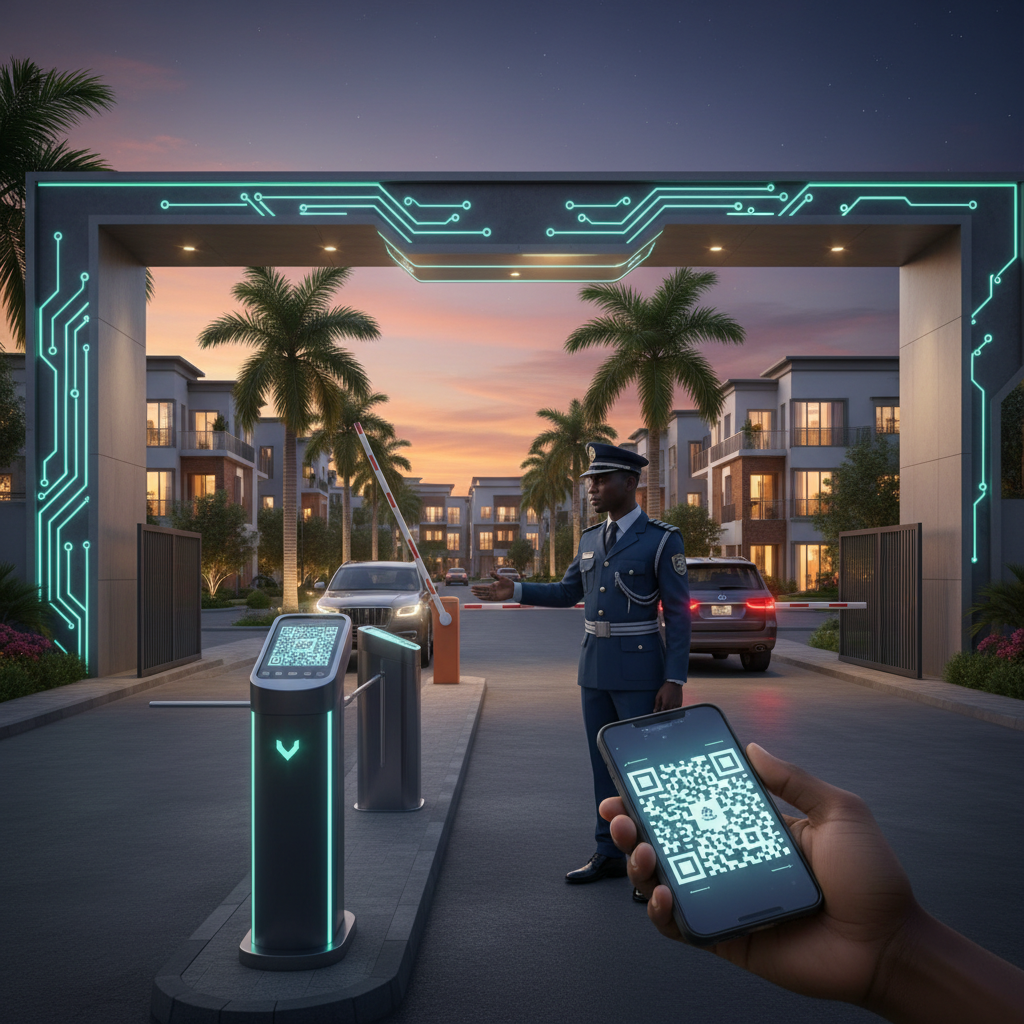
Modern residential communities across Nigeria are shifting how perimeter access is managed. Estate committees and management teams are increasingly moving away from legacy security logbooks to adopt QR-based digital access systems that deliver real-time verification, audit trails, and measurable operational improvements. In high-density urban environments—where visibility and response time are critical—this move helps estates operate more safely and more efficiently.
Traditional gatekeeping using paper logbooks or basic electronic spreadsheets struggles to meet contemporary expectations for accountability, privacy, and speed. Handwritten entries can be illegible, incomplete, or impossible to search quickly during an incident. QR-based digital passes create a digital footprint for every visitor, service provider, and delivery agent before they arrive, enabling security teams to verify identity instead of spending time on data entry.
This article explains why many Nigerian gated communities are adopting QR access systems, explores specific use cases (including recent case studies), and outlines how estates can roll out these tools while preserving resident privacy and governance.
Weaknesses in traditional security logbooks and paper-based entry systems
- Inaccuracy under peak traffic: Guards under pressure may omit details or make errors, leading to inconsistent records.
- Slow verification: Manual sign-ins can take several minutes per vehicle or visitor, creating long queues at busy entry times.
- Poor auditability: Searching physical logbooks for a particular entry across weeks of handwriting is slow and unreliable.
- Privacy exposure: Open ledgers at gates expose phone numbers, destinations, and other personal details to passersby, which conflicts with modern privacy expectations.
- Limited enforcement: Paper records provide weak traceability when incidents occur, making it hard to hold third-party contractors accountable.
These weaknesses are why many communities are moving toward "security through visibility"—a model where every authorized arrival and departure is recorded, timestamped, and searchable in real time.
Defining "Security Through Visibility" with QR digital passes
Security through visibility means the estate has timely, accurate data on who is expected on the property and who actually enters. QR-based digital passes enable:
- Pre-registration: Residents create passes that encode visitor identity, host details, vehicle plate numbers, and allowed time windows.
- Real-time validation: Guards validate passes by scanning QR codes with handheld devices; the system flags expired, reused, or unauthorised codes.
- Time-stamped trails: Every entry and exit is recorded with a timestamp, guard ID, and location, producing auditable trails for investigations or reporting.
- Role-based access: Dashboards provide guards, residents, and managers with tailored views—so each stakeholder sees only what they need to act.
These capabilities make it easier to deter unwanted entry, speed up gate throughput, and keep residents informed.
How QR-based access systems improve gate operations in Nigerian gated estates
- Faster throughput: Scanning a QR code typically reduces processing time at the gate from minutes to seconds, which matters at peak periods in Lagos, Abuja, and Port Harcourt.
- Reduced false entries: Pre-verification of service providers and frequent visitors reduces erroneous admissions and the need for secondary checks.
- Better resident experience: Residents receive instant notifications when guests arrive and can approve or deny access in seconds.
- Measurable KPIs: Management can track average processing time, peak-hour flow, and staff performance—helping to optimize guard rosters and reduce bottlenecks.
- Privacy by design: QR passes limit exposure of sensitive visitor information to only authorized personnel and logged systems.
Long-tail search variations this article also covers: "QR-based access systems for gated communities in Lagos", "how QR digital passes improve delivery verification in Nigerian estates", and "benefits of QR access for visitor screening and service providers in gated estates".
Recent Nigeria case studies: QR access systems in action (2023–2025)
NokVision has supported multiple deployments across Nigeria; selected case studies illustrate measurable impact after introducing QR-based digital passes and role-based dashboards.
Case study 1 — Large mixed-use estate, Lekki Axis, Lagos (deployment 2024)
- Challenge: Peak-hour gate queues averaging 25–40 minutes; limited verification of third-party contractors.
- Solution: Pre-authorized QR passes for visitors and contractors; guard handheld scanning; resident approvals via mobile notifications.
- Results in first 90 days: Average gate processing time fell by 70%; contractor admission errors reduced by 88%; security incident response time improved by 45%. Resident satisfaction surveys showed a 30-point increase in perceived safety.
Case study 2 — Medium-density gated community, Abuja (deployment 2025)
- Challenge: High frequency of delivery drivers and inter-unit service visits causing logbook congestion and privacy concerns.
- Solution: Delivery-specific QR passes with single-use codes and photographic capture at entry. Integration with estate ledgers for contract tracing.
- Results in six months: Single-use QR adoption reached 92% of delivery events; unauthorized entries during non-approved hours dropped by 76%; management reported faster reconciliation of third-party vendor visits for billing and oversight.
Case study 3 — Serviced apartment complex, Port Harcourt (pilot 2023–2024)
- Challenge: Need for better record-keeping for short-term guests and frequent vendor turnover; desire for transparent reporting to owners.
- Solution: Short-term QR visitor passes, automatically expiring after checkout; role-based dashboards for administrators and security teams.
- Results: Time to locate historical visitor records reduced from days to under one minute; monthly security reports included accurate entry/exit data for the first time—leading to improved resident confidence and smoother dispute resolution.
These deployments reflect broader trends observed across multiple urban developments: digital access control leads to faster entry, stronger auditability, and improved resident trust.
Specific uses for QR-based digital passes in gated communities
- Visitor pre-authorization and approval workflow (host-driven QR invites)
- Single-use delivery passes for third-party couriers with photo capture and driver ID verification
- Time-window passes for contractors and service providers with automated expiry
- Resident vehicle and visitor plate capture to reduce plate-forgery incidents
- Incident reconstruction using time-stamped entry/exit logs and guard validation records
- Integration with billing and service charge workflows for accurate contractor invoicing and accountability
Long-tail search targets: "QR access for delivery drivers in Nigerian estates", "single-use visitor QR codes Nigeria", "QR gate passes for contractor visits in gated communities".
Security, privacy, and compliance considerations
Adopting digital passes requires attention to privacy and data security:
- Data minimization: Store only required fields (name, vehicle plate, purpose, timestamps) and avoid unnecessary personal data exposure.
- Access controls: Role-based dashboards ensure only authorized users see sensitive information.
- Audit logs and retention: Establish retention policies aligned with estate governance; maintain tamper-evident audit logs for investigations.
- Encryption and uptime: Use encrypted communication for QR data and strive for high availability—NokVision platform-level SLAs maintain 99.9% uptime and resilient backups.
- Resident consent and transparency: Publish access policies and allow residents to view logs related to their unit to build trust.
These safeguards align with expectations among Nigerian residents and estate committees seeking both convenience and privacy.
Operational simplicity: rollout best practices for estates adopting QR-based access
- Pilot in one gate or phase: Run a 30–60 day pilot with volunteer residents to measure throughput gains and refine processes.
- Train security staff: Short practical sessions (1–2 hours) on scanning workflows, photographic validation, and exception handling.
- Communicate with residents: Use clear guides and onboarding messages to explain how to create passes and approve visitors.
- Configure rules: Set default time windows, single-use vs reusable passes, and delivery-specific workflows.
- Monitor KPIs: Track processing time, acceptance rates, unauthorized attempts, and resident feedback to iterate policies.
- Integrate with finance and maintenance: Link contractor visit records with service charge workflows and maintenance tickets for transparent accountability.
These steps reflect NokVision’s "From Control to Calm" and "Operational Simplicity" principles—helping estates modernize without disruption.
Measuring ROI: what estates can expect
Common measurable benefits in deployed estates include:
- Reduced average gate processing time (often 50–80% improvement)
- Fewer unauthorized entries and faster incident resolution
- Improved resident satisfaction and perceptions of safety
- Time savings for security teams and management when auditing historic entries
- Better contractor accountability and easier reconciliation for outsourced services
For many estates, the financial payback comes from improved productivity, fewer security incidents, and more efficient contractor billing processes.
Frequently asked long-tail questions (and concise answers)
-
How do QR passes reduce delivery fraud in gated communities?
Single-use QR codes tied to a delivery manifest and photo reduce reuse and impersonation; gates verify the code and capture a timestamped record. -
Can QR access systems work with multiple gates and shifts?
Yes. Role-based dashboards and guard authentication support multi-gate, multi-shift operations with synchronized records. -
What happens when a resident’s phone is unavailable?
Estates can allow alternate approvals (e.g., a resident hotline or temporary gate code) while keeping single-use and time-bound constraints in place. -
Are QR passes suitable for long-term contractors?
Yes. Contractors can be issued time-windowed reusable passes or scheduled recurring approvals with clear expiry policies. -
Can these systems integrate with billing or service charge reconciliation?
Yes—visit logs can be reconciled with contractor invoices and maintenance tickets to improve transparency and financial control.
Long-tail search phrases covered: "QR gate passes reconciliation with service charges in Nigerian estates", "how to handle resident approvals when phone is unavailable", "multi-gate QR access solutions for Lagos estates".
Next steps for estates considering QR-based access
- Run a short pilot: Select a representative gate and set clear KPIs (processing time, unauthorized attempts, resident approval rates).
- Define policies: Decide on single-use vs reusable passes, retention windows, and photo capture requirements.
- Train staff and residents: Invest in short training and clear communications to accelerate adoption.
- Measure and iterate: Use analytics to refine guard rotas, gate rules, and resident workflows.
NokVision simplifies these steps: register your estate, invite residents and guards, configure QR access rules, and begin managing visitors, deliveries, and maintenance digitally—scaling as needs grow.
Conclusion
QR-based digital access systems provide Nigerian gated estates with a practical path from paper logbooks to a modern, auditable, and resident-friendly access model. By enabling pre-authorization, instant validation, and detailed time-stamped records, QR passes deliver faster gate throughput, stronger audit trails, and improved resident confidence. Recent deployments across Lagos, Abuja, and Port Harcourt demonstrate tangible reductions in gate processing time, unauthorized entries, and dispute resolution effort—making QR access a compelling choice for estates committed to transparency, security, and efficient operations.
For communities seeking a modern approach to estate control, QR digital passes offer measurable benefits and straightforward implementation—helping gated estates become safer, smarter, and easier to manage in today’s urban environment.