Estate Management Efficiency: Digital Tools That Deliver
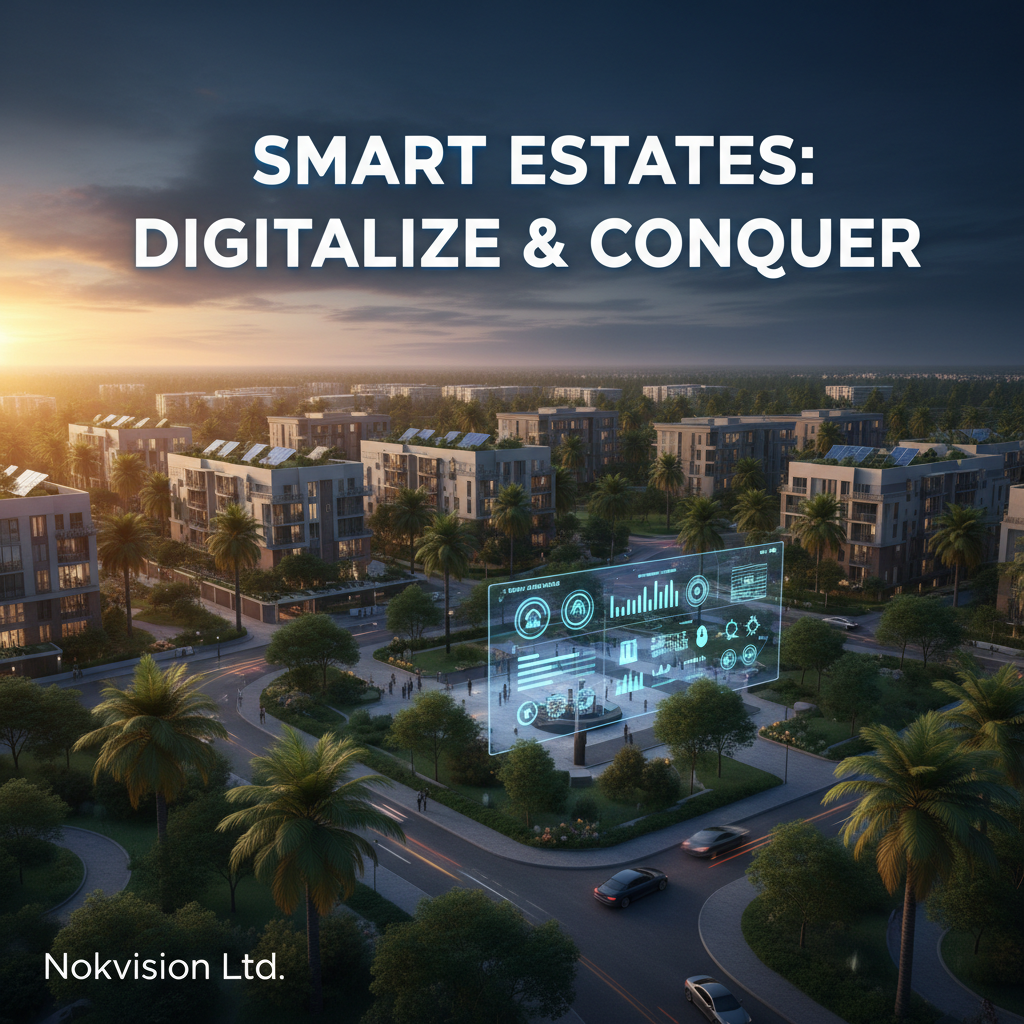
Nigeria's residential estates are under pressure to deliver more — better security, smoother operations, and greater resident satisfaction — all with leaner management teams. The old approach of paper logs, manual billing, and reactive maintenance is no longer enough.
Why Manual Processes Hold Estates Back
Estate managers relying on spreadsheets and physical records face mounting inefficiencies that compound daily.
Every unrecorded visitor, delayed service charge, or missed maintenance request represents a failure point that erodes trust. Residents notice when things fall through the cracks, and once confidence is lost, it is difficult to rebuild.
Manual systems also create accountability gaps. Without a digital audit trail, disputes over payments, security incidents, or unresolved repairs become difficult to resolve objectively.
The financial impact is equally significant. Estates that rely on manual billing often experience collection rates below 70%, leaving essential services underfunded and maintenance backlogs unaddressed.
Rethinking Visitor Access Control
Modern visitor management is about more than keeping strangers out — it is about creating a seamless, secure flow of people through your estate.
Digital visitor passes powered by QR codes give security teams instant verification at the gate. There is no need to flip through handwritten logs or call residents for confirmation. Smarter estate security starts with visitor management, and the right platform makes it effortless.
Pre-approved visitor workflows allow residents to authorize guests in advance directly from their phones. When the visitor arrives, the gate team scans the QR code and access is granted or denied within seconds.
This approach also generates a complete digital record of all entries and exits. Estate leadership can review access patterns, flag anomalies, and produce security reports — capabilities that paper logbooks simply cannot support.
Entry Data That Informs Decisions
Beyond gate control, visitor data becomes a strategic asset. Estates can identify peak access times, optimize staffing schedules, and detect unusual access patterns that may warrant investigation.
According to Smart Cities World, data-driven access control is increasingly recognized as a core component of modern residential security infrastructure. Nigerian estates adopting these tools are aligning with global best practices.
Collecting Service Charges Without the Friction
Service charge collection is one of the most persistent pain points in Nigerian estate management — and it does not have to be.
Automated billing systems send payment reminders, generate invoices, and track outstanding balances without manual intervention. Managers reclaim hours previously spent chasing payments and redirect that time toward higher-value work.
Transparent financial reporting ensures residents can see exactly where their money goes. When residents understand how service charges are allocated — security, maintenance, landscaping, utilities — they are far more likely to pay promptly and in full.
Flexible payment options further reduce friction. Allowing residents to pay in installments or through multiple digital channels removes common excuses for delay and improves overall collection performance significantly.
Financial Visibility for Every Stakeholder
Residents, estate managers, and board members each need different views of financial data. Role-based dashboards deliver the right level of detail to each stakeholder without overwhelming them.
The Nigerian Institution of Estate Surveyors and Valuers highlights financial transparency as a cornerstone of professional estate governance. Platforms that automate reporting make this standard achievable for estates of every size.
Maintenance That Resolves, Not Lingers
A maintenance request that disappears into a WhatsApp group or an email inbox is a request that rarely gets resolved efficiently. Residents deserve better visibility.
Structured digital ticketing allows residents to log issues through a dedicated portal, with automatic assignment to the relevant maintenance team. Every request has an owner, a status, and a visible timeline — eliminating ambiguity entirely.
Management teams benefit equally from this structure. Supervisors can see all open requests at a glance, prioritize urgent repairs, and confirm resolution before closing a ticket. No more guessing whether a reported issue has been addressed.
This structured approach also generates historical data about recurring issues. Estates can identify which infrastructure components fail most frequently, informing proactive maintenance schedules and capital expenditure planning.
Resident Confidence Through Transparency
When residents can track the status of their maintenance requests in real time, frustration drops significantly. Knowing that an issue is assigned and in progress is often enough to maintain trust, even before the repair is complete.
Real-time notifications play a critical role here. Automatic updates at each stage of the maintenance process — submission, assignment, completion — keep residents informed without requiring them to follow up repeatedly.
How an Integrated Platform Changes Everything
Managing visitor access, service charges, and maintenance through separate, disconnected tools creates coordination overhead that slows everything down.
An integrated platform like NokVision brings all these functions under one roof. Estate operations are transformed through digital intelligence when every team member — from the gate guard to the estate manager — works from the same connected system.
Role-based dashboards ensure that each user sees only what is relevant to their responsibilities. Security personnel see visitor queues and access logs. Residents see their payment history and maintenance tickets. Managers see the full operational picture.
This architecture eliminates duplication, reduces errors, and ensures that decisions are made on accurate, up-to-date information. Estates that consolidate onto a single platform consistently report improvements in response times and resident satisfaction.
Scaling Operations as Estates Grow
Growth introduces complexity — more residents, more visitors, more transactions, more requests. A platform designed for scale absorbs this complexity without requiring proportional increases in management headcount.
Flexible pricing structures mean estates can start with core features and expand as needs evolve. One platform to run your entire estate ensures continuity as your community grows, without the disruption of switching systems mid-scale.
Bringing Nigerian Estates Into the Digital Era
The shift toward digital estate management is not a distant aspiration — it is happening across Nigeria's gated communities, serviced apartments, and urban developments right now.
Estates that modernize their operations gain a measurable competitive advantage. Higher resident retention, improved security outcomes, and stronger financial performance all follow when management systems are built on reliable digital infrastructure.
Platforms like NokVision, trusted by over 50 Nigerian estates, demonstrate that enterprise-grade management tools are accessible and practical for communities of all sizes. The barrier to entry has never been lower.
The question is no longer whether to digitise — it is how quickly an estate can complete the transition. According to McKinsey & Company, organisations that digitise core operations early consistently outperform peers who delay adoption. For Nigerian estates, acting now creates a lasting operational advantage.
Modernizing residential community governance is a commitment that pays dividends across every function — from visitor access to financial accountability to maintenance resolution. Estates that invest in the right platform today are building the foundation for sustainable, professional community management for years to come.