Estate Security Software Cost Breakdown Nigeria
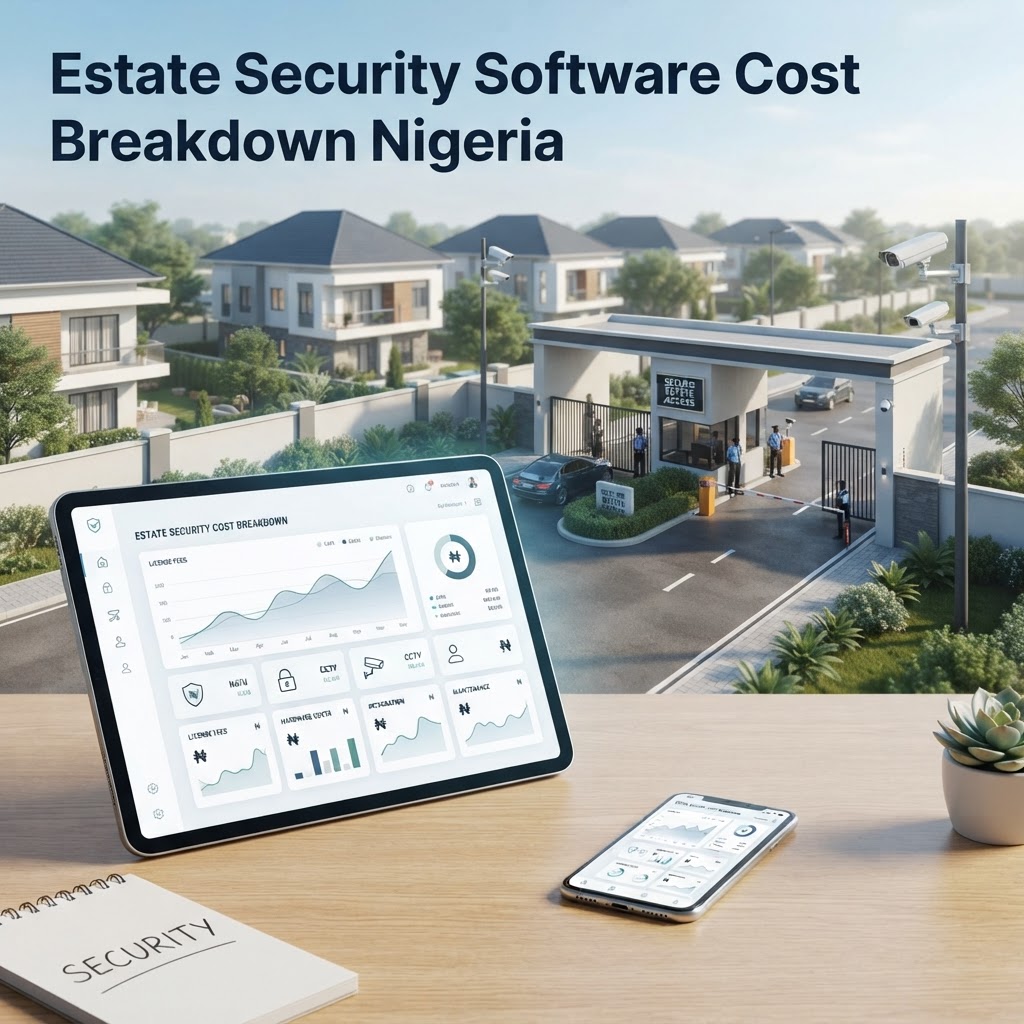
Digital security infrastructure is no longer a luxury reserved for commercial complexes or multinational facilities. Across Nigeria's growing network of gated communities, serviced apartments, and planned urban developments, estate managers are confronting a critical question: what does it actually cost to implement modern security software, and is the investment justified? This article provides a structured estate security software cost breakdown for Nigeria, examining pricing drivers, market comparisons, and the long-term return on investment that platforms like NokVision deliver to residential communities.
Why Is Digital Estate Security Essential Now?
Moving beyond manual logs to intelligent protection
For decades, Nigerian estates relied on paper-based visitor registers, physical gate passes, and security personnel manually recording entry and exit activity. While familiar, this approach creates significant vulnerabilities. Records can be falsified, misplaced, or simply left incomplete during high-traffic periods. A single missed entry can compromise the safety of hundreds of residents.
The shift to digital access control — particularly QR-based visitor management systems — fundamentally changes this equation. Instead of a handwritten log, every visitor interaction is time-stamped, digitally recorded, and instantly retrievable. Estate managers gain real-time visibility into who enters and exits the estate, when, and under whose authorization. This level of auditability is not just operationally convenient; it is a meaningful deterrent against unauthorized access and internal security lapses.
According to data from the Nigerian Communications Commission, smartphone penetration in Nigeria exceeded 45% in recent years and continues to grow, making mobile-first security solutions increasingly viable even in mid-tier residential markets.
Centralized platforms further strengthen trust by creating transparent, auditable security records accessible to estate managers, property owners, and relevant stakeholders. When residents know that every visitor approval is digitally logged and every gate event is captured in a live dashboard, confidence in the estate's security posture improves measurably. For communities navigating concerns around unauthorized access prevention, this visibility is foundational.
The transition from manual logs to intelligent, data-driven protection is not simply a technological upgrade — it is an institutional maturity shift that modern Nigerian estates can no longer afford to delay.
What Are the Primary Cost Drivers?
Understanding components that influence monthly investment
Before evaluating specific pricing, estate managers must understand what actually drives the cost of security software. Three primary categories shape the investment: infrastructure model, scalability requirements, and feature depth.
Infrastructure Model: Cloud SaaS vs. On-Premise Installation
Cloud-based Software-as-a-Service (SaaS) platforms eliminate the need for dedicated on-site servers, proprietary hardware installations, and specialized IT staff. Estates pay a predictable monthly or annual subscription fee and access the platform through web browsers or mobile apps. On-premise solutions, by contrast, require significant upfront capital expenditure — hardware procurement, installation, and ongoing maintenance — which can push initial costs into the millions of naira before a single resident is onboarded. For most Nigerian estates, cloud SaaS models deliver superior cost efficiency and faster deployment timelines.
Scalability Factors
Pricing tiers across most platforms are structured around the number of active residential units, concurrent users, and security personnel accounts. A 40-unit estate has fundamentally different operational demands than a 400-unit community. As estates grow, software costs scale accordingly — but the per-unit cost typically decreases at higher tiers, rewarding larger communities with better value ratios.
Feature Depth and Module Complexity
Basic visitor management tools — digital logs, entry notifications, and simple access approvals — represent the entry point of the market. However, comprehensive platforms offering automated service charge billing, maintenance request tracking, real-time analytics dashboards, and role-based access control command higher subscription fees. The critical question is not whether advanced features cost more, but whether the operational savings they generate exceed their incremental cost. Research from Deloitte's Africa Real Estate Outlook consistently highlights that operational automation in property management delivers measurable returns within the first year of deployment.
Evaluating any platform requires a clear cost-to-value analysis across these three dimensions before signing a subscription agreement.
How Do Pricing Models Compare in Nigeria?
Analyzing entry-level to enterprise-grade solutions
The Nigerian estate security software market currently spans a wide pricing spectrum, from simple visitor log applications to fully integrated estate operating platforms. Understanding where different solutions sit — and what they actually deliver — is essential for making an informed procurement decision.
Entry-Level Tools (₦5,000–₦20,000/month)
At this tier, estates typically access basic digital visitor registers, SMS or WhatsApp-based entry notifications, and simple reporting exports. These tools replace paper logs but offer limited analytical capability, no automated billing integration, and minimal support infrastructure. They are appropriate for very small estates or communities testing digital adoption for the first time.
Mid-Tier Professional Platforms (₦20,000–₦60,000/month)
This segment represents the most active area of the market. Platforms at this level offer QR-based visitor management, service charge tracking, maintenance coordination modules, and role-based dashboards for different user types — residents, security personnel, and estate managers. The cost-to-value ratio is strongest here for estates between 50 and 500 units.
Enterprise-Grade Solutions (Custom Pricing)
Large-scale developments managing multiple estates, thousands of units, or requiring custom API integrations with third-party property management systems fall into enterprise territory. Pricing is negotiated directly with vendors and typically includes dedicated account management, custom implementation support, and SLA-backed uptime guarantees.
The Starter vs. Enterprise Dilemma
Choosing between a flat-fee starter plan and a custom enterprise solution depends less on estate size and more on operational complexity. A 200-unit estate with aggressive service charge collection challenges and a high visitor volume may justify a professional or enterprise tier that a simpler 300-unit community does not need.
Hidden Costs to Anticipate
Implementation fees, staff training sessions, data migration from legacy systems, and ongoing technical support are frequently excluded from advertised subscription prices. Before committing to any platform, estates should request a full total cost of ownership breakdown. A useful framework for evaluating security infrastructure decisions is available in this estate security audit checklist for property managers.
For further comparative context, the NokVision vs estate management software alternatives review provides a structured side-by-side analysis of leading platforms in the Nigerian market.
How Does NokVision Deliver Transparent Pricing?
A tiered approach to modern estate management
NokVision's pricing architecture is designed to eliminate ambiguity and match estate communities with the capabilities they actually need — without forcing smaller estates to pay for enterprise-scale features they will not use.
Starter Plan — ₦15,000/month
Designed for estates of up to 50 residential units, the Starter Plan covers digital visitor management with QR-based access verification and basic operational reporting. For smaller gated communities or newly established estates building their digital infrastructure from the ground up, this tier provides a credible, professionally managed entry point. Estates can eliminate paper logs, improve gate security, and begin generating auditable visitor records within days of onboarding.
Professional Plan — ₦45,000/month
Covering up to 500 residential units, the Professional Plan is NokVision's most comprehensive fixed-price offering. It adds advanced analytics dashboards, automated service charge tracking, payment reminders, and maintenance request management to the visitor control foundation. For mid-sized communities where manual billing and unresolved maintenance complaints are active pain points, this tier delivers the most immediate operational impact. Estate managers gain real-time visibility into payment performance, outstanding balances, and maintenance resolution rates — replacing guesswork with actionable intelligence. This directly supports the kind of transparent resident complaint management that modern communities require.
Enterprise Plan — Custom Pricing
For large-scale developments, property management companies overseeing multiple estates, or communities requiring custom integrations and unlimited unit capacity, NokVision's Enterprise Plan is structured around specific operational requirements. Pricing is determined through direct consultation and includes priority support, dedicated onboarding assistance, and bespoke configuration. This tier is particularly well-suited to property developers and institutional landlords managing distributed residential portfolios across multiple locations.
Across all tiers, NokVision's pricing includes access to its core platform with no hidden implementation surcharges — a deliberate design choice that reflects the platform's commitment to transparency.
What Is the Long-Term ROI of Security Software?
Calculating financial and operational benefits of automation
The financial case for investing in estate security software extends well beyond the monthly subscription cost. When evaluated against the operational inefficiencies, revenue leakage, and resident attrition that manual processes generate, the return on investment becomes compelling.
Reducing Administrative Overhead
Estate managers operating manual systems routinely spend significant portions of their working week on tasks that automation handles in seconds — chasing service charge payments, manually compiling visitor reports, coordinating maintenance assignments via phone calls and WhatsApp threads. NokVision's automation capabilities reduce administrative overhead by up to 70%, freeing management staff to focus on higher-value responsibilities. For estates employing full-time administrative personnel, this efficiency gain translates directly into measurable cost savings.
Mitigating Financial Leakage
Service charge collection is one of the most persistent financial challenges facing Nigerian estate managers. According to PricewaterhouseCoopers Nigeria's Real Estate Report, collection inefficiencies and delayed payments are among the top operational concerns reported by residential estate operators. Automated billing cycles, digital payment reminders, and transparent financial dashboards significantly reduce collection delays and improve accountability. When residents can view their outstanding balances and payment histories in real time, disputes decrease and compliance rates improve.
The Value of Resident Satisfaction
Beyond quantifiable metrics, the quality of resident experience has a direct bearing on property values and occupancy retention. Estates offering frictionless digital visitor approvals, mobile maintenance reporting, and real-time communication with management are increasingly preferred over those still operating manual systems. Understanding how visitor management compares between manual and digital approaches underscores just how significant this competitive differentiation has become.
Conclusion
The estate security software cost breakdown for Nigeria reveals a market that has matured significantly — offering solutions at price points suitable for small community estates and large-scale developments alike. The critical insight is that cost should never be evaluated in isolation. A platform that costs ₦45,000 per month but eliminates ₦200,000 in monthly administrative inefficiencies and recovers previously uncollected service charges represents extraordinary value.
NokVision's transparent, tiered pricing model — starting at ₦15,000/month — is designed specifically for Nigerian residential communities that need enterprise-grade reliability without enterprise-grade complexity. Trusted by over 50 estates and built for the operational realities of African residential communities, NokVision delivers the visibility, automation, and accountability that modern estate management demands.
For estate managers ready to move from manual processes to intelligent operations, the investment conversation starts not with "how much does it cost?" but "how much is the current system already costing us?"