How to manage gated estate in Lagos
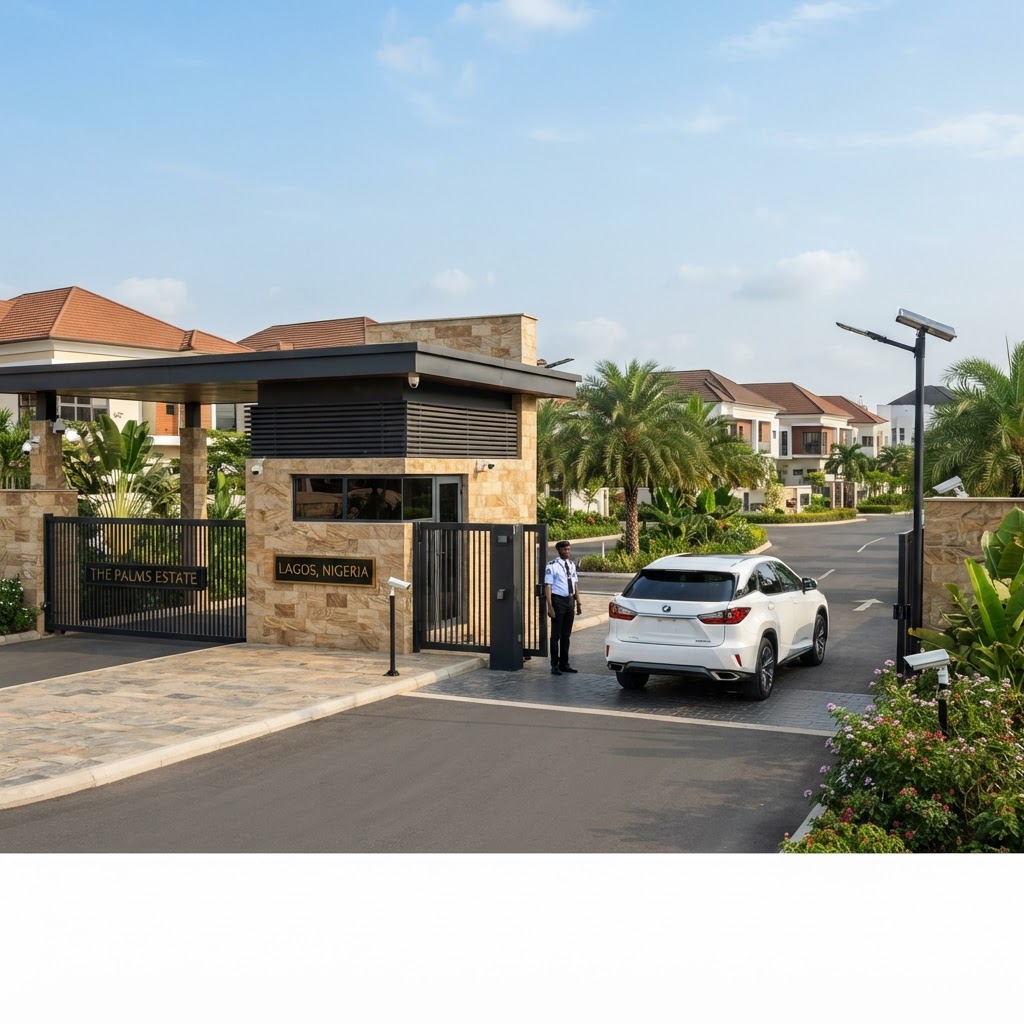
Lagos is one of Africa's fastest-growing megacities, and with that growth comes an expanding network of gated residential communities stretching from Lekki to Ajah, Magodo to Ikeja GRA. These estates promise security, structure, and a higher standard of living — but delivering on that promise requires far more than perimeter walls and a gatehouse. Managing a gated estate in Lagos is a discipline that demands systems, accountability, and increasingly, smart digital infrastructure.
This guide provides a practical, end-to-end framework for estate managers, property management companies, and resident association leaders who want to operate their communities with professionalism, transparency, and efficiency.
Why Is Managing a Lagos Gated Estate So Hard?
Lagos is not just Nigeria's commercial capital — it is one of the most densely populated urban environments on the continent, with infrastructure challenges that make estate management uniquely demanding. The rapid expansion of gated communities across Lekki Phase 1, Chevron Drive, and Sangotedo has placed enormous pressure on estate management teams that are still relying on manual processes built for a different era.
One of the most persistent issues is the reliance on paper-based registers and verbal communication. Security guards record visitor names by hand in logbooks that can be lost, forged, or simply ignored. There is no audit trail, no real-time visibility, and no accountability when incidents occur.
Beyond security, the financial burden on Lagos estates is substantial. Residents face recurring annual service charges, diesel deposits for estate generators, and periodic levies for road maintenance — all of which require a structured collection and reporting system that most estates lack. When these funds are not tracked transparently, trust breaks down between residents and management.
Poor management also accelerates physical deterioration. Without a structured maintenance workflow, cracked estate roads go unrepaired, recreational facilities fall into disuse, and essential infrastructure like boreholes and electrical systems degrade — directly reducing property values and resident satisfaction. Understanding these challenges is the first step toward building a smarter estate operation.
How Can QR-Based Access Control Fix Security Gaps?
The traditional security model at most Lagos estate gates is alarmingly fragile. A visitor arrives, a guard writes their name in a ledger, and entry is granted based on a phone call to the host resident. This process is slow, inconsistent, and entirely dependent on human diligence. During peak hours — school runs, evening returns from work, or weekend gatherings — the system collapses into long queues and frustrated residents.
QR-based visitor management replaces this analog bottleneck with a verified, tamper-proof digital process. When a resident expects a guest, they generate a unique visitor pass directly from their mobile app. The pass contains encrypted visit information including the visitor's name, the permitted entry window, and the host unit. At the gate, the security guard scans the QR code and receives an instant confirmation — no phone calls, no paper entries, no room for manipulation.
The efficiency gains are immediate. Gate wait times drop significantly because verification takes seconds rather than minutes. Security guards no longer carry the cognitive burden of making judgment calls about who should and should not enter. The resident retains control and visibility over who they have invited, and management gains a live digital audit trail of every entry and exit.
For estate managers, real-time visitor logs are transformational. Instead of reviewing handwritten books at the end of the week, managers can query entry data by date, unit, or visitor category at any time. If a security incident occurs, the investigation begins with complete digital records rather than incomplete paper entries. According to research on smart residential security systems, real-time access control significantly reduces unauthorized entry incidents in managed residential communities.
This level of visibility transforms security from a reactive function into a proactive one — and it is one of the most immediate improvements any Lagos estate can make.
What Is the Best Way to Collect Service Charges?
Service charge collection is one of the most contentious areas of estate management in Nigeria. In many Lagos communities, collection rates hover well below 70% due to a combination of poor communication, lack of payment channels, and absent financial transparency. When residents do not understand how their money is being used, they are naturally reluctant to pay.
Automated billing systems address this challenge at every stage of the collection cycle. Instead of estate managers manually tracking who has paid and issuing handwritten receipts, the platform generates invoices automatically, sends payment reminders at configured intervals, and updates resident accounts in real time upon payment. Levy arrears are flagged automatically, removing the awkward personal follow-ups that damage community relationships.
Transparency is the cornerstone of sustainable service charge management. When residents can log in and see a clear breakdown of how collected funds are allocated — generator diesel, road maintenance, security wages, waste management — their trust in management increases dramatically. This is especially important in Nigerian estate ecosystems where financial mismanagement has historically been a source of conflict.
For further insight into how purpose-built tools compare to generic options, explore this guide on estate management software for Nigerian properties, which covers the key features estates should evaluate before selecting a platform.
Every transaction on a digital platform creates an immutable record, providing a clear audit trail that can be presented to resident associations at any time. This accountability is not just good governance — it is the foundation of a well-functioning community.
How Do Digital Tools Streamline Estate Maintenance?
Maintenance management is where the gap between well-run and poorly-run Lagos estates is most visible. In communities without a structured system, residents report issues verbally to security guards or via WhatsApp group messages — methods that are unreliable, untracked, and almost impossible to manage at scale. Requests get lost, timelines are never set, and residents lose confidence in management's ability to respond.
A digital maintenance workflow begins with a simple but powerful shift: residents submit requests through a mobile app. The request captures the issue type, the unit location, photographic evidence if needed, and the submission timestamp. From that moment, the request exists as a trackable work order rather than a forgotten message.
Estate managers receive the request on their dashboard and assign it to the appropriate service technician or vendor. As work progresses, the status is updated in real time — residents can see whether their request is pending, in progress, or completed without needing to follow up manually. This eliminates the communication confusion that frustrates both residents and management teams.
The long-term value of digital maintenance logs is equally important. Over time, a centralized record of all maintenance activities reveals recurring problems, high-cost facilities, and vendor performance patterns. This data helps management make informed decisions about preventive maintenance budgets. Estates managing infrastructure like boreholes and solar installations will find this particularly valuable — you can also review guidance on common solar panel problems and how to fix them to understand why proactive maintenance tracking matters for energy systems specifically.
Why Is One Unified Platform Better Than Many Apps?
Many estate management teams in Lagos already use some combination of digital tools — perhaps a WhatsApp group for communication, a spreadsheet for payment tracking, and a CCTV system for security monitoring. While each tool serves a function, this fragmented approach creates data silos, duplicated effort, and operational chaos. Information does not flow between systems, so managers must manually reconcile data across multiple platforms to get a coherent picture of estate operations.
A unified estate operating system eliminates these silos by bringing security, financial management, maintenance, and resident communication into a single platform. Every user — resident, security guard, estate manager, or property company administrator — interacts with the same underlying data through a role-based dashboard designed for their specific responsibilities. A resident sees their visitor passes, service charge status, and maintenance requests. A security guard sees the gate access queue and verified visitor passes. A manager sees the full operational picture across all functions.
For property management companies running portfolios of multiple estates across Lagos — from a 50-unit community in Ibeju-Lekki to a 400-unit development in Ikeja — this centralized architecture is especially powerful. Standardized processes can be deployed across every estate, comparative performance analytics become available, and administrative teams are no longer stretched managing incompatible systems.
Research from the Urban Land Institute consistently highlights that residential communities with integrated management platforms report higher resident satisfaction scores and lower operational costs than those using fragmented toolsets.
How Does Data Intelligence Shape Better Estate Decisions?
The most forward-thinking estate boards in Lagos are beginning to operate the way modern organizations do — making decisions based on data rather than intuition. Live dashboards that display real-time metrics on visitor activity, payment performance, maintenance resolution rates, and facility usage give managers the intelligence they need to act decisively.
Tracking visitor patterns, for example, can inform decisions about gate staffing levels during peak hours. Monitoring service charge collection rates in real time allows management to intervene before arrears accumulate to levels that threaten operational budgets. Over months and years, this data builds into a rich operational history that helps estate boards forecast future costs, plan capital expenditure, and present credible financial reports to resident associations during Annual General Meetings.
According to Deloitte's insights on smart building management, data-driven facility management reduces unplanned maintenance costs by up to 30% while improving resident experience scores. In the Lagos estate context, that kind of operational efficiency is a direct competitive advantage.
What Are the Steps to Digitize a Lagos Estate?
Transitioning from analog to digital estate management does not require a complex or disruptive implementation. With the right platform, the process can be completed in stages over a matter of days.
The first step is registering the estate on the platform and configuring key settings — defining unit numbers, setting service charge rates, and establishing access control zones. This configuration phase ensures the system reflects the specific structure of the community before any users are onboarded.
The second step is inviting stakeholders. Residents receive enrollment links that allow them to create accounts and connect their units to the system. Security personnel are assigned gate-access roles, and management staff are configured with the appropriate administrative permissions. High adoption rates depend on clear communication about the benefits of the platform — residents who understand that digital visitor passes mean shorter gate queues will engage quickly.
The third step is scaling operations as the community grows. Automation handles billing cycles and payment reminders without additional administrative effort, while analytics dashboards grow more insightful as data accumulates. Estates that begin on a starter configuration can scale to advanced analytics and multi-estate management capabilities seamlessly.
What Is the ROI of a Digital Management Platform?
Estate managers often view digital platforms as a cost centre rather than a value driver — but the return on investment is measurable and significant. NokVision's Starter Plan at ₦15,000 per month serves estates of up to 50 units, while the Professional Plan at ₦45,000 per month accommodates up to 500 units with advanced analytics and service charge tracking. For large property portfolios, the Enterprise Plan offers custom pricing with unlimited units and priority support.
Against these costs, the operational savings are substantial. Automating service charge billing, visitor management, and maintenance workflows has been shown to reduce administrative overhead by up to 70% — freeing estate managers to focus on strategic community issues rather than routine administrative tasks. Improved collection rates on service charges also mean that estates have more funds available for maintenance and infrastructure investment.
Beyond efficiency, modern digital infrastructure has a measurable impact on property values. Estates that can demonstrate professional management, transparent financial records, and smart security systems command higher rental and sale prices in the Lagos property market. Residents are increasingly prioritising well-managed communities, and the estate's reputation as a professionally operated development becomes a lasting competitive asset.
For estates grappling with recurring infrastructure decisions — from water treatment to energy systems — related resources such as this guide on generator vs. solar inverter options for Nigerian homes can help management teams evaluate cost and efficiency trade-offs across the estate's utility mix.
Conclusion: From Chaos to a Connected Community
Managing a gated estate in Lagos demands more than good intentions — it requires systems, accountability, and the right technology infrastructure. The challenges are real: security vulnerabilities at the gate, service charge arrears, deteriorating infrastructure, and the constant communication friction between residents and management. But each of these challenges has a proven digital solution.
QR-based access control replaces paper registers with verified, real-time verification. Automated billing replaces manual tracking with transparent, trust-building financial reporting. Digital maintenance workflows replace lost complaints with structured, trackable work orders. And a unified platform replaces fragmented tools with a single operating system for the entire community.
NokVision is purpose-built for precisely these challenges — not as a generic property management tool adapted from Western markets, but as an intelligent estate operating platform designed for the realities of Nigerian residential communities. Trusted by over 50 estates and supporting thousands of residents across Nigeria, it offers the scalability, reliability, and resident-first design that modern Lagos estates require.
The shift from analog chaos to digital control is not a distant aspiration. It is a practical, affordable, and increasingly necessary step for every gated community that wants to protect its residents, preserve its property values, and build the kind of trust that makes a community truly thrive.