Estate vs Property Tools for Nigerian Communities
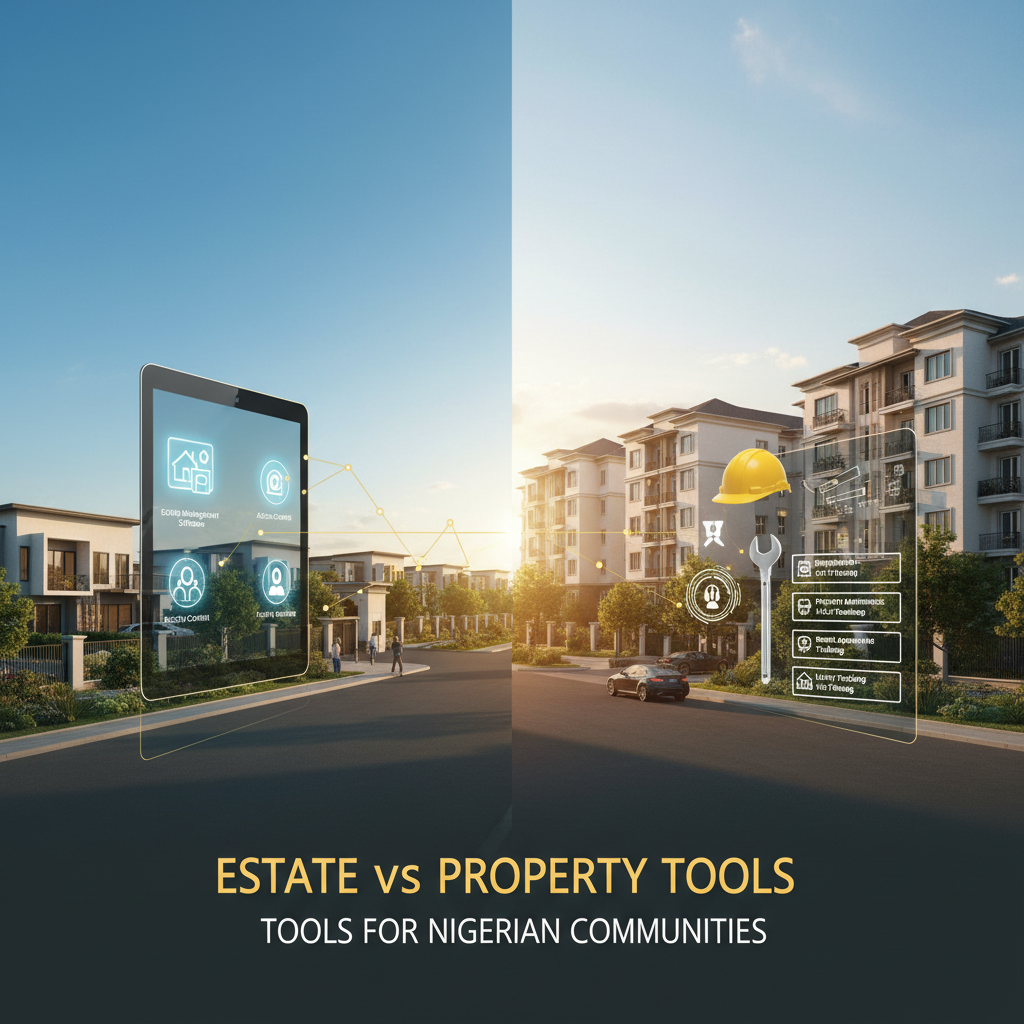
Most residential administrators in Nigeria eventually realize that using a general property tool to run a gated community feels like using a hammer to fix a watch. While these systems share a common vocabulary, the operational goals of managing a 500-unit estate differ significantly from managing a portfolio of individual rental flats. Nigerian estate managers need a digital infrastructure designed for community coordination, security visibility, and transparent financial reporting.
Comparative Management Frameworks
Defining the Operational Difference
Property management software is primarily designed to protect the interests of a landlord through lease tracking and rent collection. These tools excel at managing tenancies, legal documents, and vacant units for individual property owners. However, they often fail to address the complex ecosystem of a residential community where the focus is on shared infrastructure and collective security.
Residential estate administration requires a platform that facilitates constant interaction between residents, security guards, and facility managers. Instead of just tracking who owes rent, these communities must track who enters the gate and how shared diesel costs are distributed. This shift from asset management to community operations is why Role-Based Dashboards: Transforming Nigerian Estate Administration have become a necessity for modern Nigerian estates.
Property Management Focus Areas
Traditional property software usually centers on the financial performance of a building as a commercial asset. It prioritizes features like vacancy rates, lease expiration alerts, and marketing tools for finding new tenants. For a commercial landlord in Victoria Island, these functions are vital for maintaining high occupancy and consistent rental income.
These platforms frequently integrate with accounting software to provide high-level tax reports and profit/loss statements for property owners. According to the Nigerian Institution of Estate Surveyors and Valuers, maintaining accurate property records is essential for long-term asset valuation. However, these systems rarely offer tools for managing the day-to-day movement of people or the maintenance of shared community assets.
Infrastructure and Security Visibility
Estate Infrastructure Needs
In contrast, estate management tools act as the central nervous system for a residential community's daily life. These platforms prioritize visitor access control, service charge transparency, and rapid maintenance coordination across multiple residential units. The goal is not just to collect funds but to ensure that the entire community ecosystem functions smoothly and securely.
NokVision provides this specific layer of operational infrastructure by connecting every stakeholder through a single interface. By Digitizing Nigerian Estate Service Charge Tracking, managers can move away from manual spreadsheets and provide residents with instant visibility into how communal funds are utilized. This transparency is the foundation of trust in any organized residential development.
The Security Visibility Gap
Security remains the most critical priority for gated communities across Lagos, Abuja, and Port Harcourt. Most property management software lacks integrated tools for gatehouse operations, leaving security teams to rely on outdated paper logs. This disconnect creates a dangerous blind spot where management has no real-time visibility into who is currently inside the estate.
Digital systems solve this problem by providing security guards with mobile-first tools to verify arrivals instantly. Moving away from manual entry methods significantly reduces wait times at the gate and improves the resident experience. There are several reasons Why QR Code Passes Replace Nigerian Paper Logbooks, including the ability to track every entry and exit with a digital audit trail.
Modern security infrastructure provides the following benefits:
- Real-time monitoring of visitor traffic and gatehouse activity.
- Instant notifications to residents when guests arrive or depart.
- Revocable access tokens for domestic staff and contractors.
- Emergency alerts that can be triggered by residents through a mobile app.
Service Charge Transparency
Managing Communal Financial Flows
Service charges in Nigerian estates are notoriously difficult to manage because they involve complex variables like diesel levies and waste disposal. Property management software often treats these as simple line items, which fails to capture the granular detail required for community audits. Residents are more likely to pay their dues when they can see a clear breakdown of where the money goes.
Smart systems allow managers to Automate Service Charge Collection in Nigerian Estates through automated billing and reminders. This reduces the administrative burden of chasing payments and ensures that the estate has sufficient cash flow for essential services. Automated financial reporting also eliminates the risk of human error in accounting, fostering a culture of accountability.
Transparent financial management includes several key elements:
- Individual resident portals for viewing payment history and outstanding balances.
- Automated receipts sent immediately after a payment is verified.
- Real-time budget tracking for estate projects and utility expenses.
- Professional financial reports that can be shared during town hall meetings.
Enhancing the Resident Experience
Resident Experience Beyond Rent
In a residential estate, the relationship between management and residents is ongoing and collaborative rather than purely transactional. Residents expect high levels of service and responsive communication regarding communal issues like power outages or water maintenance. A system that only handles payments will inevitably fall short of meeting these community expectations.
Research from PwC Nigeria suggests that the demand for tech-enabled residential services is rising among Nigeria's middle class. Digital platforms allow residents to submit maintenance requests directly from their phones and track the progress of repairs in real-time. This reduces frustration and ensures that facility managers are held accountable for their response times.
Effective community engagement requires specific tools:
- Centralized announcement boards for estate-wide notifications and updates.
- Maintenance tracking systems with photo evidence and status updates.
- Facility booking tools for shared spaces like clubhouses or gyms.
- Direct feedback loops between residents and the estate admin team.
Scaling Community Operations
Scaling Modern Community Operations
As an estate grows from 50 to 500 units, manual processes become a significant bottleneck for growth and security. Relying on WhatsApp groups and physical logbooks leads to information silos and operational confusion. Modernizing with the right infrastructure allows an estate to scale its operations without a linear increase in administrative staff.
Organizations like the International Facility Management Association emphasize the importance of data-driven decision-making in large-scale residential operations. By using analytics, managers can identify trends in visitor traffic or recurring maintenance issues before they become major problems. This proactive approach transforms estate management from a reactive struggle into a controlled and professional operation.
Strategic operational planning involves these steps:
- Analyzing peak visitor hours to optimize security guard shifts.
- Identifying high-cost maintenance areas to implement preventive strategies.
- Monitoring collection trends to adjust budget allocations for the fiscal year.
- Reviewing resident feedback to prioritize future estate improvements.
The Future of Estate Administration
Nigerian estates are evolving into smart ecosystems that require more than just a place to store tenant data. The shift toward operational infrastructure is driven by a need for safety, transparency, and convenience. While property management software has its place in the commercial sector, residential communities require a more specialized touch.
NokVision is building this digital operating system to ensure that African estates deserve and receive world-class operational systems. By replacing manual logs and fragmented communication with an integrated platform, estates can achieve true operational simplicity. This transformation turns residential communities into organized, secure, and professionally managed environments where residents can thrive.