How Nigerian Estates Can Prevent Unauthorized Access
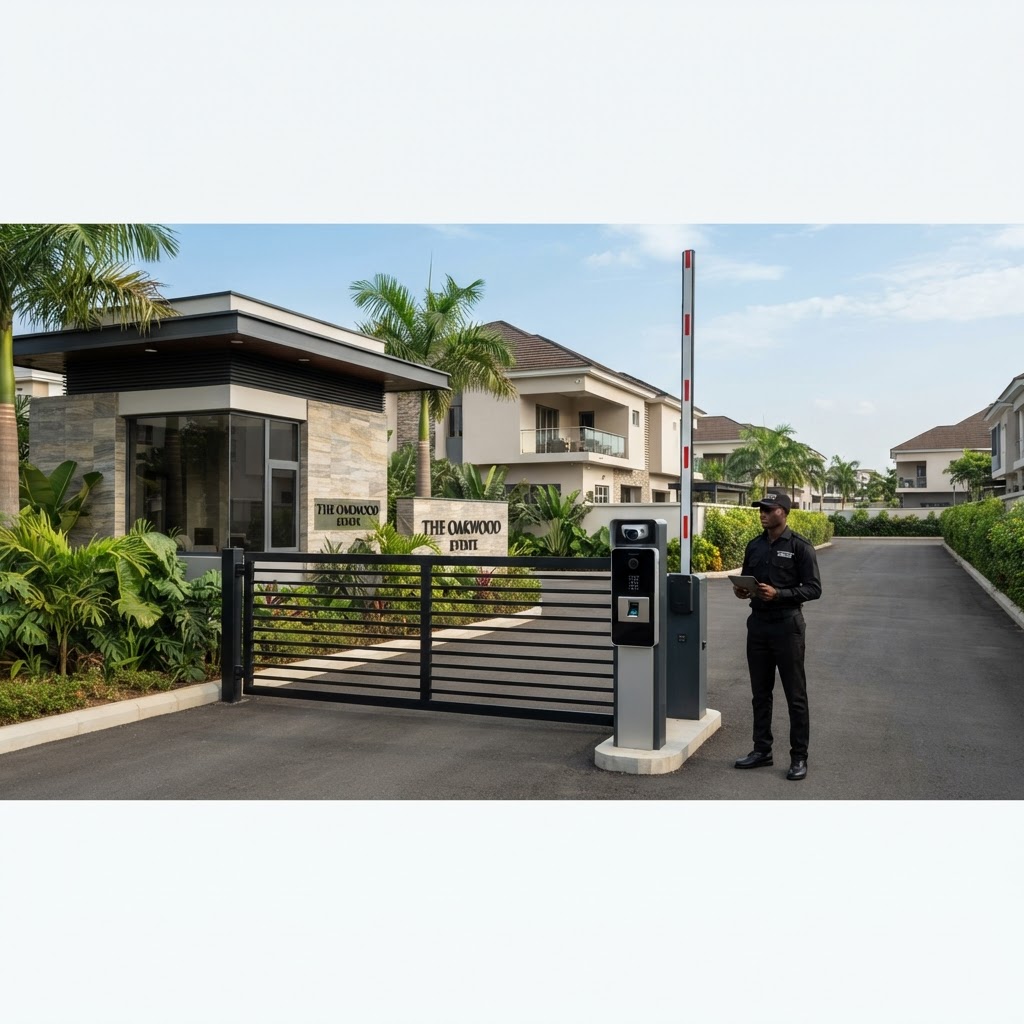
Unauthorized access remains one of the most persistent and dangerous challenges facing residential estates across Nigeria. From Lekki to Abuja, Enugu to Port Harcourt, estate managers and residents alike are grappling with a troubling reality: traditional security methods are no longer sufficient. As criminal networks grow more sophisticated and residential communities expand in scale and complexity, the gap between legacy security practices and modern threats has never been wider.
This article examines the structural weaknesses in conventional estate security, the evolving threat landscape, and how intelligent digital platforms are redefining what it means to protect a residential community. Whether you manage a boutique gated community or a large multi-phase estate, understanding how Nigerian estates can prevent unauthorized access is the first step toward building a safer, smarter residential environment.
Why Are Traditional Methods Failing Nigerian Estates?
Manual logs and physical keys leave estates exposed
For decades, Nigerian gated communities have relied on a combination of paper-based visitor logs, physical gate passes, and security personnel to control who enters and exits their premises. On the surface, this system appears functional. In practice, it is riddled with vulnerabilities that compromise the safety of thousands of residents every day.
Paper-based visitor logs are fundamentally unreliable. Security personnel manually record visitor names, vehicle plate numbers, and the units they are visiting — a process susceptible to illegible handwriting, falsified identity entries, and deliberate manipulation. A visitor who provides a false name or an incorrect destination faces virtually no verification challenge. There is no cross-referencing, no identity confirmation, and no audit trail that cannot be altered with a pen.
The human burden on security guards compounds this problem significantly. During peak hours — early mornings, evenings, and weekends — a single security post may process hundreds of visitors. Under this volume, fatigue becomes a critical security liability. Studies on human performance in high-frequency decision-making tasks consistently show that error rates increase sharply after sustained periods of repetitive, low-engagement activity. Security lapses during these windows are not exceptions; they are predictable outcomes of a flawed system.
Physical keys and manual gate passes present an equally serious problem. Keys are duplicated. Gate passes are shared, photocopied, or retained long after a visitor's legitimate access period has expired. Former staff, ex-tenants, and lapsed contractors routinely retain physical credentials that were never formally revoked. According to the Nigeria Security and Civil Defence Corps, a significant proportion of estate-related security incidents involve individuals who had prior legitimate access to the property. The inability to revoke physical credentials in real time is not a minor operational inconvenience — it is a structural security failure.
What Are the Primary Threats to Gated Communities Today?
Criminal networks and internal risks are escalating
The security threat facing Nigerian residential estates has evolved considerably. Criminals targeting gated communities are no longer opportunistic individuals probing a perimeter fence. Today's threats involve coordinated networks that conduct advance reconnaissance, exploit operational gaps, and leverage insider knowledge to gain entry.
High-profile incidents of armed robbery, kidnapping, and burglary in Nigerian residential estates — documented extensively by security researchers and law enforcement agencies — frequently reveal a common pattern: the perpetrators had prior intelligence about the estate's security routines, entry points, and the absence of robust verification systems. Reactive security postures, where estates respond only after an incident, are no longer adequate. Proactive, intelligence-driven security is now a necessity.
Internal threats represent an equally pressing concern. Service providers — including cleaners, plumbers, electricians, and domestic staff — require regular access to residential estates. Without a structured credentialing and verification system, estates have no reliable mechanism to confirm that the individual presenting themselves at the gate is the same person who was authorised by a resident. Contractor impersonation and the exploitation of service provider access windows are well-documented entry vectors for criminal activity in urban Nigerian communities.
High resident turnover creates further complications. In serviced apartments and mixed-use developments, the resident population changes frequently. Without a digital system to track and update access permissions in real time, estates accumulate a growing list of individuals — former residents, expired contractors, lapsed visitors — who technically retain access rights that have never been formally terminated. This shadow population of unauthorised credential holders represents a significant and often invisible security risk.
For a comprehensive understanding of how estates can structure their emergency response alongside access control, the guide on Estate Emergency Response Plans for Nigerian Communities provides a practical framework for building layered community safety protocols.
How Does Digital Access Control Transform Estate Security?
QR codes and audit trails replace guesswork with certainty
Digital access control systems represent a fundamental shift in how estates manage visitor entry — not merely an upgrade to existing processes, but a complete architectural redesign of how security is implemented and enforced.
At the core of modern estate access control is QR-code-based visitor management. When a resident invites a guest, a unique, time-bound QR code is generated and sent directly to the visitor's mobile device. Upon arrival, the security team scans the code at the gate. The system verifies the credential in real time, confirms the visitor's identity against the resident's pre-approved invitation, and logs the entry automatically. The credential is valid only for the specified time window and cannot be reused, transferred, or duplicated. When the visitor departs, their exit is logged with equal precision.
This mechanism eliminates the core vulnerabilities of manual systems. There is no handwriting to misread, no identity to falsify without detection, and no credential that persists beyond its authorised period. Each access event creates an immutable digital record — a timestamped, identity-linked entry in a secure audit trail that security teams and estate managers can review at any time.
The operational efficiency gains are equally significant. Manual gate checkpoints during peak hours create bottlenecks that frustrate residents, delay legitimate visitors, and create the kind of rushed, high-pressure conditions in which security personnel are most likely to make errors. Automated digital verification reduces average gate processing time dramatically — from a manual average of two to four minutes per vehicle to under thirty seconds with QR-based systems. This is not merely a convenience improvement; it is a direct security enhancement, as faster processing reduces queue congestion and the social pressure on guards to wave vehicles through without proper verification.
NokVision's platform integrates QR-based visitor management with role-based access controls, ensuring that security personnel, estate managers, and residents each have precisely the visibility and authority appropriate to their function. For estates evaluating their technology options, a detailed comparison of credential technologies is available in the article on Estate Access Control: RFID, QR, or Biometrics, which examines the relative merits of each approach for Nigerian residential environments.
The International Association of Professional Security Consultants consistently identifies audit trail integrity as one of the most critical components of an effective access control system. Digital platforms deliver this capability by default — something paper-based systems are structurally incapable of providing.
What Role Does Real-Time Intelligence Play in Preventing Breaches?
Live data transforms security from reactive to proactive
Preventing unauthorized access is not only about controlling individual entry events — it is about maintaining continuous situational awareness across the entire estate. Real-time intelligence is what transforms a digital access control system from a better version of a manual log into a genuinely proactive security infrastructure.
Live dashboards give estate managers instant, consolidated visibility into every security event occurring across the property. Unusual patterns — repeated failed access attempts, visitors lingering beyond their authorized time window, or unexpected surges in traffic through a specific gate — are immediately visible rather than discoverable only in retrospect during a manual log review. This shift from retrospective analysis to live monitoring is the difference between catching a breach after it happens and preventing it from occurring at all.
Real-time notification systems extend this intelligence to residents and security teams simultaneously. When a visitor arrives at the gate, the resident receives an instant mobile alert and can approve or deny access remotely. This resident-in-the-loop model eliminates the scenario where a visitor gains entry simply because a busy guard was unwilling to delay traffic by making a phone call. It also creates a documented approval record — a digital confirmation that the resident explicitly authorised the visit.
The analytical dimension of real-time intelligence adds a further layer of operational value. By tracking visitor volumes, peak traffic hours, and recurring security incidents over time, estate managers can make data-informed decisions about staffing levels, gate configurations, and patrol schedules. The Urban Land Institute has noted in its residential security research that data-driven resource allocation consistently outperforms intuition-based scheduling in residential security contexts. NokVision's analytics engine delivers exactly this capability — transforming raw access data into actionable operational intelligence.
How Can Estates Implement a Unified Security System?
From onboarding to scale: a practical transition roadmap
Transitioning from a manual security infrastructure to a unified digital operating system is a structured process, not a disruptive overhaul. Modern platforms like NokVision are designed specifically to make this transition accessible for estates of all sizes, from compact gated communities to large multi-phase developments.
The implementation process begins with estate configuration — registering the estate on the platform, defining entry points, establishing resident units, and setting role-based access permissions for all user categories. This foundational step ensures that the system reflects the estate's actual operational structure before any users are onboarded. Once configured, residents, security personnel, and management staff are invited to the platform, each receiving a role-appropriate dashboard with precisely the tools and visibility their function requires.
The strategic value of integration should not be underestimated. Estates that deploy visitor management as a standalone tool capture only a fraction of the security and operational benefits available to them. When access control is integrated with service charge management, maintenance coordination, and resident communications — as NokVision's platform enables — the estate gains a unified operational intelligence layer. A contractor arriving to complete a maintenance job, for instance, can be verified against an active work order in the system, creating a direct link between access events and operational authorizations. For more on how integrated platforms deliver measurable returns, the Estate Management Software ROI Calculator Guide provides a practical framework for quantifying the financial impact of digitization.
Scalability is a non-negotiable requirement for any security infrastructure. Estates grow, resident populations change, and operational demands evolve. NokVision's tiered pricing model — from the Starter Plan at ₦15,000 per month for estates up to 50 units, to the Professional Plan at ₦45,000 per month for up to 500 units, and Enterprise pricing for large-scale or multi-estate operators — ensures that the platform scales with the community rather than constraining it. For property management companies overseeing multiple estates, the article on Estate Management Software for Multi Estate Operators outlines how centralized oversight and standardized processes deliver security consistency across an entire portfolio.
Conclusion
The question of how Nigerian estates can prevent unauthorized access has a clear and increasingly urgent answer: the transition from manual, paper-based security systems to intelligent, data-driven digital platforms is no longer optional. It is operationally necessary.
Legacy security methods — paper logs, physical keys, and fatigue-prone manual checkpoints — create predictable vulnerabilities that sophisticated threats will inevitably exploit. Digital access control, real-time intelligence, and unified estate operating systems close these gaps systematically, replacing human error and operational guesswork with verifiable data and automated precision.
NokVision is purpose-built for this transformation. Trusted by over 50 estates and designed specifically for the realities of Nigerian and African residential communities, it delivers enterprise-grade security infrastructure with the operational simplicity that estate managers, security teams, and residents need. The path to a safer, smarter estate begins with a single decision: to stop managing security reactively and start operating it intelligently.
Visit Nokvision.com to register your estate and begin building a residential community that is as secure as it is well-managed.